
Contents
Nara park(奈良公園)
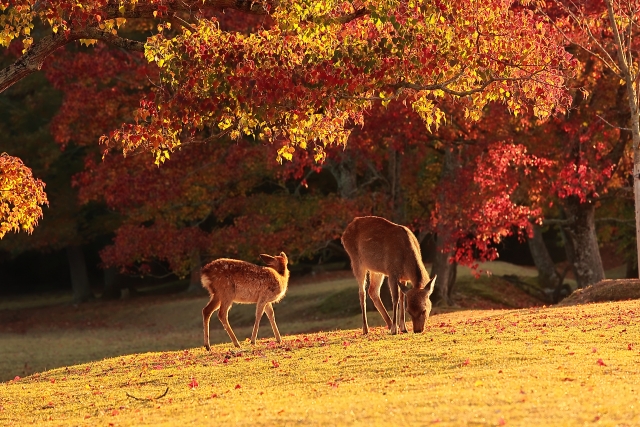
Historic Setting with Natural Beauty The park combines stunning fall colors with ancient temples and shrines, creating a picturesque blend of nature and cultural heritage. The contrast between red and golden leaves against traditional architecture is particularly photogenic.
Friendly Deer Over 1,000 wild deer roam freely throughout the park. During autumn, visitors can enjoy the unique experience of seeing deer wandering among fallen leaves and colorful trees, making it distinctively different from other autumn viewing spots.
Vast Parkland Nara Park covers about 500 hectares, offering numerous spots to enjoy autumn colors. Visitors can explore various areas like Todaiji Temple, Kasuga Taisha Shrine, and Wakakusayama Hill, each providing different perspectives of fall foliage.
Variety of Trees The park features diverse tree species including maple, ginkgo, and cherry trees, creating a rich palette of reds, oranges, and yellows. The peak season typically runs from mid-November to early December.
Accessible Location Located just a short walk from Kintetsu Nara Station, the park is easily accessible for both domestic and international tourists, making it a convenient autumn destination in the Kansai region.
Hasedera(長谷寺)
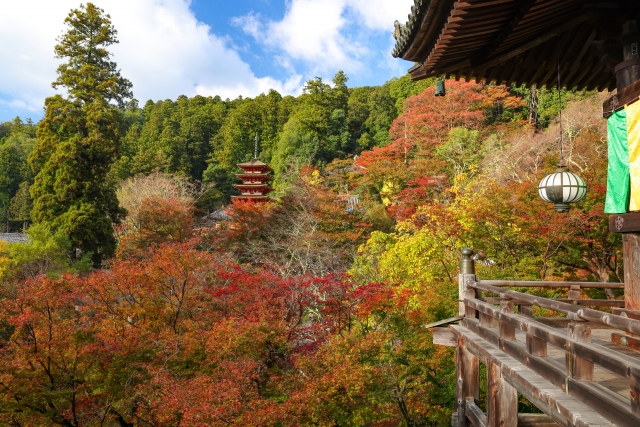
Dramatic Hillside Setting The temple is built into the slopes of Mount Hase, creating a spectacular multi-layered landscape. The autumn colors cascade down the hillside, offering breathtaking panoramic views of red and gold foliage against the mountain backdrop.
The Famous Covered Stairway (Nobori-ro) The temple’s iconic 399-step covered corridor lined with lanterns becomes especially enchanting in autumn. Walking up the stairs surrounded by vibrant maple trees creates an almost mystical atmosphere, with colorful leaves visible through the corridor’s openings.
Historic Architecture Founded in the 8th century, Hasedera features impressive traditional buildings, including the main hall (Hondo) that juts out over the hillside. The contrast between the vermilion temple structures and the autumn foliage creates stunning photo opportunities.
Abundant Maple Trees The temple grounds are filled with hundreds of Japanese maple trees that turn brilliant shades of crimson and scarlet. The density of these trees creates an immersive autumn experience.
Evening Illuminations During peak autumn season, Hasedera often holds special evening illumination events where the temple and autumn leaves are lit up, creating a magical nighttime atmosphere.
Peaceful Mountain Location Located in Sakurai City, Nara Prefecture, Hasedera offers a more tranquil experience compared to crowded tourist spots, allowing visitors to enjoy the autumn beauty in a serene, contemplative setting.
Mount Yoshino (吉野山)
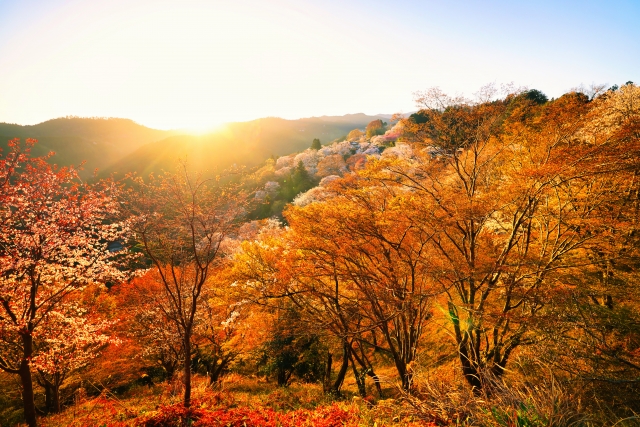
Spectacular Mountain Scenery Mount Yoshino offers breathtaking views of autumn colors spreading across the mountainside. The entire mountain transforms into a tapestry of red, orange, and yellow, creating one of Japan’s most dramatic fall landscapes.
Famous for Cherry Trees While best known for its 30,000 cherry trees in spring, these same trees produce beautiful autumn foliage. The cherry leaves turn vibrant shades of red and orange, covering the mountain in warm colors.
Multiple Viewing Areas The mountain is divided into four distinct areas – Shimo-senbon (lower), Naka-senbon (middle), Kami-senbon (upper), and Oku-senbon (inner). Each level offers different perspectives and elevations for viewing the autumn colors, allowing visitors to experience various vistas.
Historic and Spiritual Significance Yoshino has been a sacred site for over 1,300 years, with numerous temples and shrines dotting the mountainside. The combination of autumn foliage with historic wooden structures and ancient pilgrimage paths creates a deeply atmospheric experience.
Rope Way Access The Yoshino Ropeway makes it easy to access the mountain, allowing visitors of all ages to enjoy the autumn scenery without strenuous hiking.
UNESCO World Heritage Site As part of the “Sacred Sites and Pilgrimage Routes in the Kii Mountain Range,” Yoshino attracts visitors who appreciate both natural beauty and cultural heritage.
Peak Season Timing The autumn colors typically peak from late October to mid-November, with the changing elevation creating an extended viewing period as colors progress from higher to lower areas.
Okadera(岡寺)
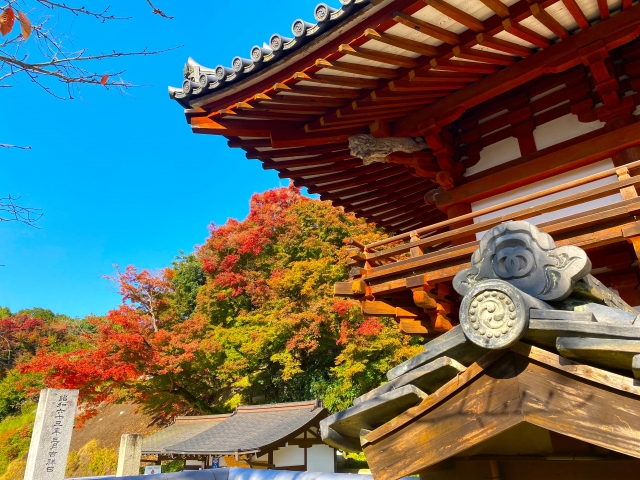
Hillside Temple with Scenic Views Located on the slopes of Mount Amanokagu in Asuka Village, Okadera offers elevated views where visitors can overlook the historic Asuka region surrounded by autumn colors. The temple’s position creates beautiful vistas of the surrounding countryside painted in fall hues.
Historic Significance Founded in the 7th century, Okadera is one of Japan’s oldest temples and is famous for housing a large seated statue of Kannon (the Buddhist deity of mercy). The combination of ancient history and seasonal beauty creates a meaningful cultural experience.
Intimate Garden Setting Unlike larger, more crowded sites, Okadera features well-maintained temple gardens where maple trees and other foliage create a more intimate autumn viewing experience. The carefully landscaped grounds showcase traditional Japanese garden aesthetics.
Vibrant Maple Trees The temple grounds are adorned with Japanese maple trees that turn brilliant shades of red and crimson in autumn. These trees frame the temple buildings and pathways, creating picturesque scenes throughout the complex.
Flower Temple Heritage Known as one of the “Flower Temples” of Yamato, Okadera celebrates natural beauty year-round. In autumn, this tradition continues with the colorful foliage complementing the temple’s reputation for seasonal displays.
Peaceful Asuka Location Situated in the rural Asuka area—the ancient birthplace of Japanese civilization—Okadera offers a tranquil atmosphere away from major tourist crowds, allowing visitors to enjoy autumn colors in a serene, contemplative setting.
Shoryakuji(正歷寺)
“Carpet of Brocade” (Nishiki no Kake) Shoryakuji is famous for its stunning display of fallen autumn leaves that carpet the ground, creating what’s known as “nishiki no kake” (a brocade carpet). The thick layer of red and yellow leaves covering the temple grounds creates a magical, colorful landscape.
Pristine Mountain Setting Located deep in the mountains of Nara, the temple is surrounded by dense forests that turn vibrant shades of red, orange, and yellow. The secluded mountain location creates an immersive autumn experience with colors visible in every direction.
Approximately 3,000 Maple Trees The temple grounds and surrounding area feature around 3,000 Japanese maple trees of various species, creating an exceptionally rich and diverse palette of autumn colors, from bright scarlet to deep crimson and golden yellow.
Historic Sake Brewing Temple Founded in 992, Shoryakuji is known as the birthplace of refined sake brewing in Japan. This unique cultural heritage adds historical significance to the autumn visit, making it more than just a foliage viewing spot.
Natural Stream and Bridge A clear mountain stream runs through the temple grounds, and the red arched bridge (Fukujobashi) surrounded by autumn foliage creates one of Nara’s most photographed autumn scenes. The reflection of colors in the water enhances the beauty.
Limited Crowds Due to its remote mountain location, Shoryakuji tends to be less crowded than more accessible sites, offering visitors a peaceful and contemplative atmosphere to fully appreciate the autumn colors.
Peak Season Timing The temple’s autumn colors typically peak from mid-November to early December, providing a slightly later viewing opportunity compared to other locations in Nara.
Mitarai Gorge(御手洗溪谷)
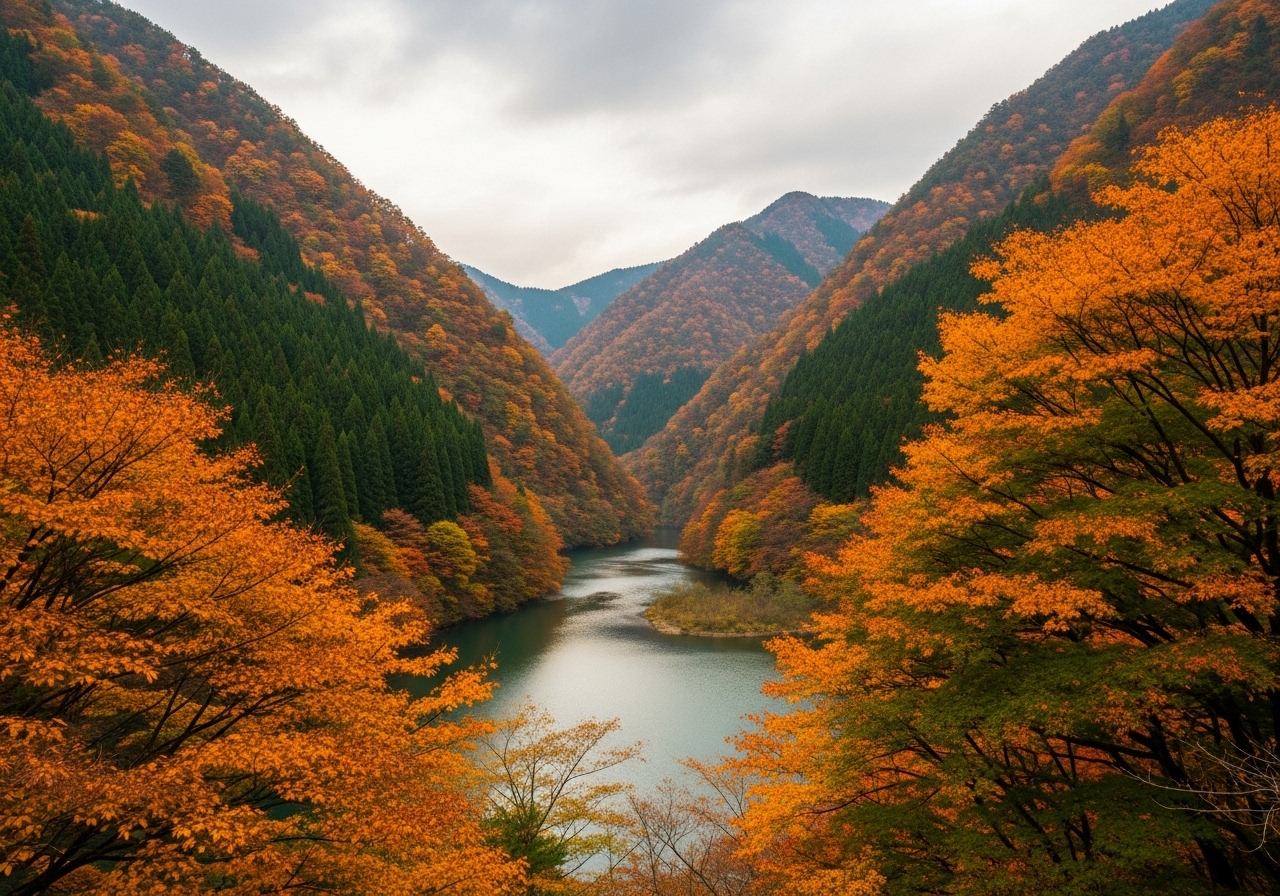
Dramatic Gorge Landscape Mitarai Gorge features stunning natural rock formations, clear streams, and waterfalls cutting through the mountains. During autumn, the gorge walls become covered in vibrant red and orange foliage, creating a dramatic contrast with the emerald green water below.
Crystal Clear Waters The Tenkawa River flows through the gorge with exceptionally pure, transparent water. The reflection of autumn colors on the water’s surface and the contrast between colorful leaves and clear blue-green pools create breathtaking scenery.
Scenic Walking Trail A well-maintained walking path follows the gorge for approximately 2 kilometers, allowing visitors to experience the autumn colors up close while walking alongside the stream. The trail offers varying perspectives of waterfalls, rock formations, and foliage.
Waterfalls and Rock Formations The gorge features several beautiful waterfalls and unique rock shapes carved by water over millennia. These natural features combined with autumn foliage create dynamic, photogenic landscapes throughout the valley.
Remote Mountain Location Located in the Yoshino area of Nara Prefecture, Mitarai Gorge offers an authentic wilderness experience away from urban areas. The pristine natural environment allows visitors to immerse themselves in untouched autumn beauty.
Cool, Refreshing Atmosphere The combination of flowing water, mountain air, and shade from surrounding trees creates a cool, comfortable environment for autumn hiking, making it an ideal escape from warmer lowland areas.
Peak Season The autumn colors typically reach their peak from late October to mid-November, when the entire gorge transforms into a corridor of red, orange, and yellow foliage reflected in the pristine waters below.
Hikone Castle(彦根城)
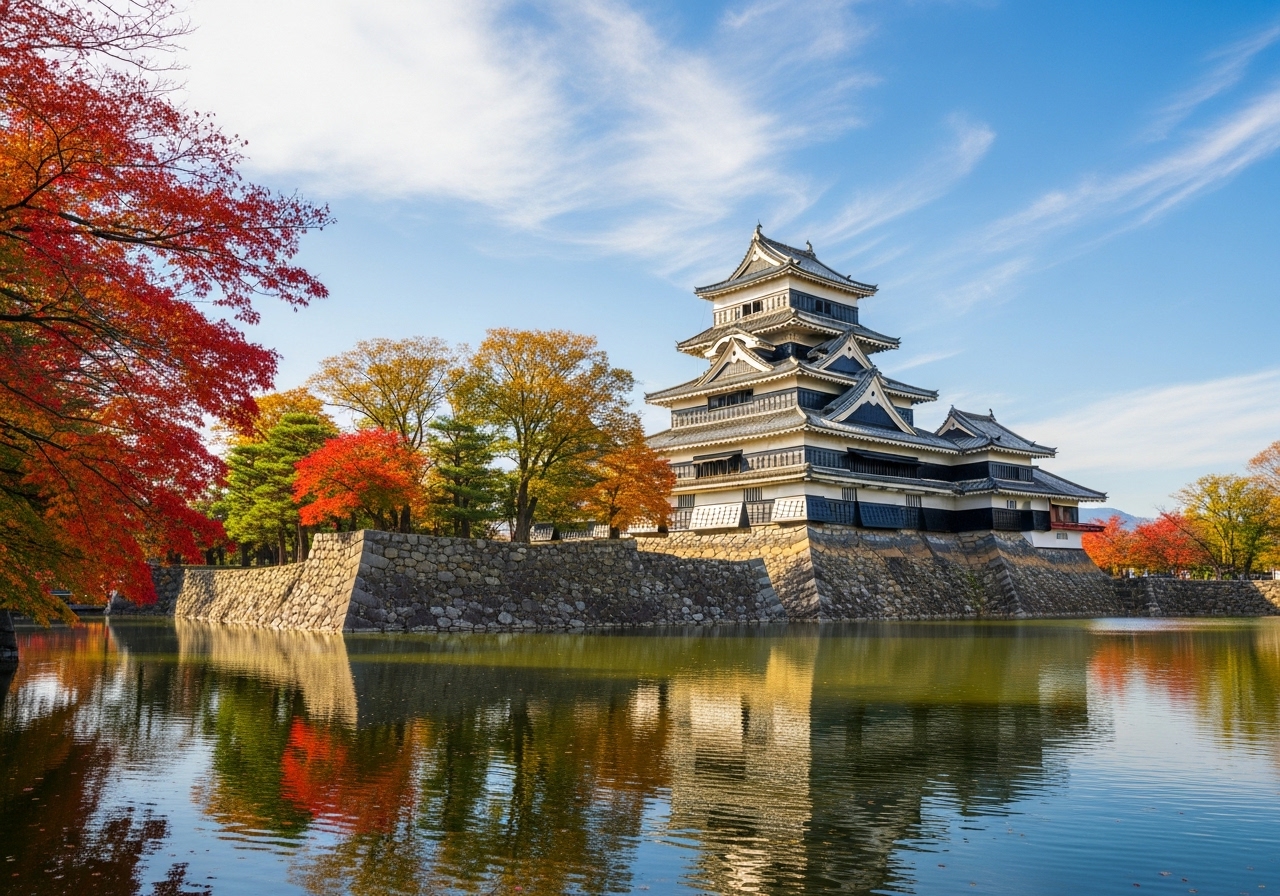
National Treasure Castle Hikone Castle is one of only five castles in Japan designated as a National Treasure. The sight of the pristine white castle tower framed by vibrant red and gold autumn leaves creates an iconic and historically rich scene that attracts photography enthusiasts and history lovers alike.
Genkyu-en Garden The castle grounds include Genkyu-en, a beautiful traditional Japanese garden built in 1677. During autumn, the garden’s carefully arranged maple trees and landscaping create stunning reflections in the pond, offering classic Japanese aesthetic beauty with the castle as a backdrop.
Lake Biwa Views Located near the shores of Lake Biwa, Japan’s largest lake, the castle provides elevated views where visitors can see autumn colors spreading across the landscape with the lake in the distance, creating expansive scenic vistas.
Historic Moats and Stone Walls The castle’s impressive stone walls and water-filled moats are lined with trees that turn brilliant colors in autumn. Walking along the moat pathways surrounded by falling leaves creates an atmospheric journey through history.
Well-Preserved Edo Period Architecture Built in the early 1600s and never destroyed, Hikone Castle retains its original wooden structures. The authentic historical buildings combined with seasonal foliage offer a genuine glimpse into Japan’s feudal past enhanced by natural beauty.
Spacious Castle Grounds The extensive castle park provides numerous spots for enjoying autumn colors, from formal gardens to wooded areas, allowing visitors to explore different perspectives of fall foliage throughout the grounds.
Evening Illuminations During peak autumn season, special illumination events light up the castle and surrounding foliage at night, creating a magical atmosphere that showcases the autumn colors in a completely different way.
Ishiyamadera(石山寺)
Ishiyamadera Temple is popular for autumn foliage for several reasons:
Unique Rock Foundation The temple is built upon a massive natural outcrop of wollastonite rock, which gives the temple its name (“Stone Mountain Temple”). During autumn, the contrast between the ancient gray rock formations and the vibrant red maple leaves creates a striking and unique visual景観.
Literary Significance Ishiyamadera is famous as the place where Murasaki Shikibu wrote parts of “The Tale of Genji,” Japan’s most celebrated classical novel, in the 11th century. A special room commemorates this connection, and experiencing autumn colors here evokes the elegant world of classical Japanese literature.
Multi-Level Temple Complex The temple buildings are arranged at various elevations on the hillside, offering different vantage points for viewing autumn foliage. Visitors can enjoy changing perspectives as they climb through the complex, with colors surrounding them at every level.
Tahoto Pagoda View The temple’s two-story pagoda (Tahoto), a designated National Treasure, becomes especially photogenic when framed by autumn maple trees. The contrast between the traditional architecture and seasonal colors creates one of Shiga Prefecture’s most iconic autumn scenes.
Lake Biwa Proximity Located near the southern tip of Lake Biwa, Ishiyamadera benefits from a mild climate and scenic location. The temple overlooks the lake and surrounding landscape, which adds depth to the autumn viewing experience.
Evening Illuminations During peak autumn season (typically November), the temple holds special nighttime illumination events. The lit-up temple buildings, rock formations, and maple trees create a magical, otherworldly atmosphere.
Rich Variety of Trees The temple grounds feature approximately 2,000 trees, including various species of Japanese maple, ginkgo, and other deciduous trees, creating a diverse palette of reds, oranges, and yellows throughout the extensive grounds.
Historical Importance Founded in 747, Ishiyamadera is one of the oldest and most historically significant temples in the region, making an autumn visit both visually beautiful and culturally meaningful.
Hiyoshi Taisha Shrine(日吉大社)
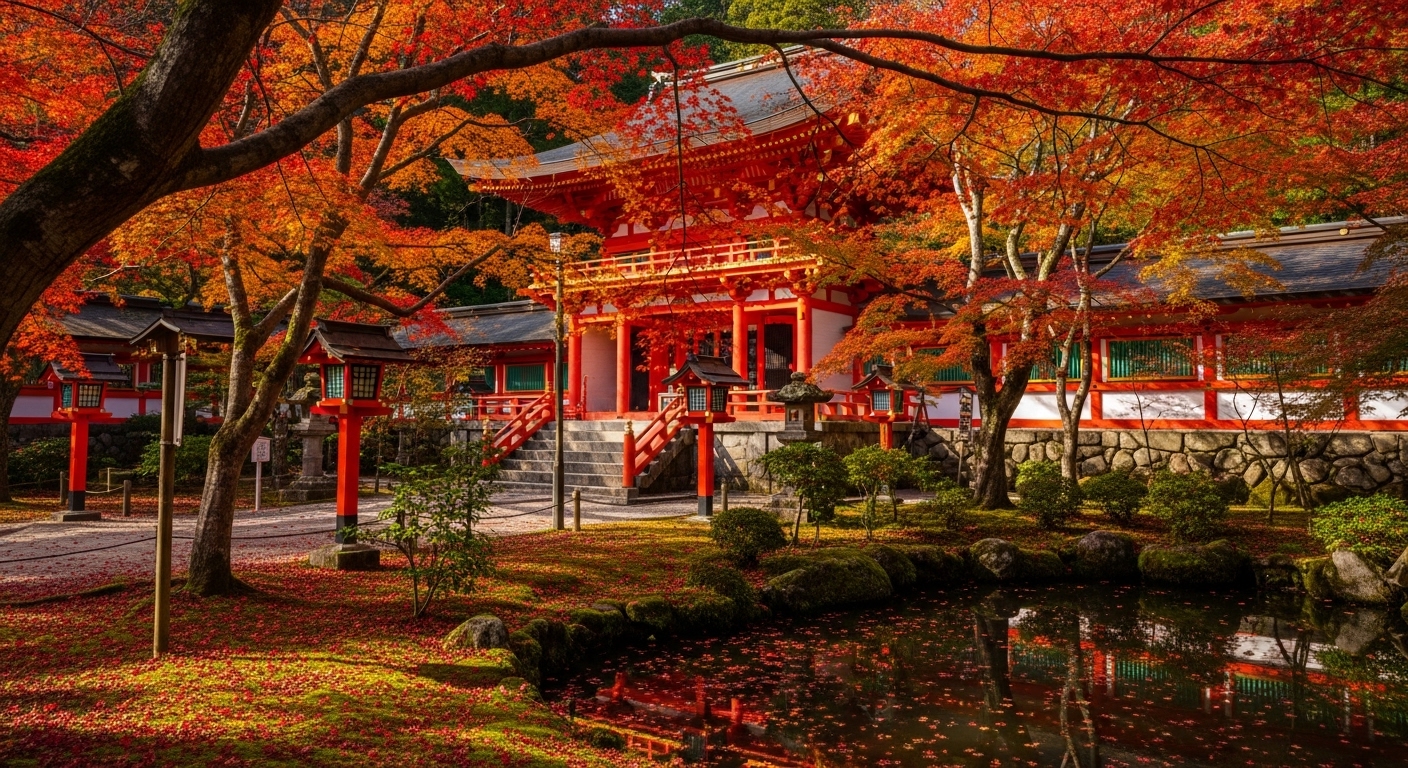
Hiyoshi Taisha Shrine is popular for autumn foliage for several reasons:
Approximately 3,000 Maple Trees The shrine grounds feature around 3,000 maple trees that create one of the most spectacular autumn displays in the Kansai region. The sheer density of trees produces an overwhelming canopy of red, orange, and yellow colors.
Momiji Tunnel The approach to the shrine includes a famous pathway lined with maple trees that form a natural tunnel of autumn foliage overhead. Walking through this “momiji tunnel” creates an immersive, almost magical experience as colored leaves surround visitors on all sides.
Historic Shrine Architecture As the head shrine of over 3,800 Hiyoshi and Hie shrines throughout Japan, Hiyoshi Taisha features beautiful traditional architecture dating back over 2,100 years. The vermilion shrine buildings and torii gates contrast beautifully with the autumn foliage.
Sanno Festival Heritage Hiyoshi Taisha is famous for the Sanno Festival, one of the three great festivals of the Lake Biwa region. The shrine’s cultural importance adds depth to the autumn viewing experience, connecting visitors to centuries of tradition.
Mountain Setting Located at the foot of Mount Hiei near Lake Biwa, the shrine benefits from a natural mountain environment where autumn colors appear particularly vibrant. The elevation and cool mountain air enhance the intensity of the fall foliage.
Evening Illuminations During peak autumn season (typically mid-November to early December), the shrine holds special nighttime illumination events. The lit-up maple trees and shrine buildings create a breathtaking nighttime atmosphere that’s dramatically different from daytime viewing.
Scenic Bridge (Hanatobashi) The shrine’s iconic arched bridge surrounded by maple trees becomes one of Shiga’s most photographed autumn scenes. The reflection of autumn colors in the water below adds to the visual beauty.
Easy Access from Kyoto Located just a short train ride from Kyoto in Otsu City, Hiyoshi Taisha is easily accessible yet offers a more tranquil experience than crowded Kyoto temples, making it a popular autumn destination for both locals and tourists.

